Camera-Tuning Bandpass Filters for Dynamic Monochromatic Contrast Imaging
To maximize imaging performance, Heli Optical Systems (HeliOS) has developed a line of in-camera optical bandpass filters designed to tune and enhance a camera sensor’s spectral performance to the applications’ optimal illumination wavelength.
In order to generate the ideal spectral profile for a bandpass filter, we utilize a proprietary plasma deposited hard dielectric coating on a high luminous transmittance eco-friendly glass that is considered to be the gold standard in camera imaging. The built-for-in-camera design doesn’t just stop at improving image contrast resolution and maximizing illumination intensity. It goes further, by ensuring precision, stability and consistent repeatability which are absolutely crucial for your imaging systems.
Product Information
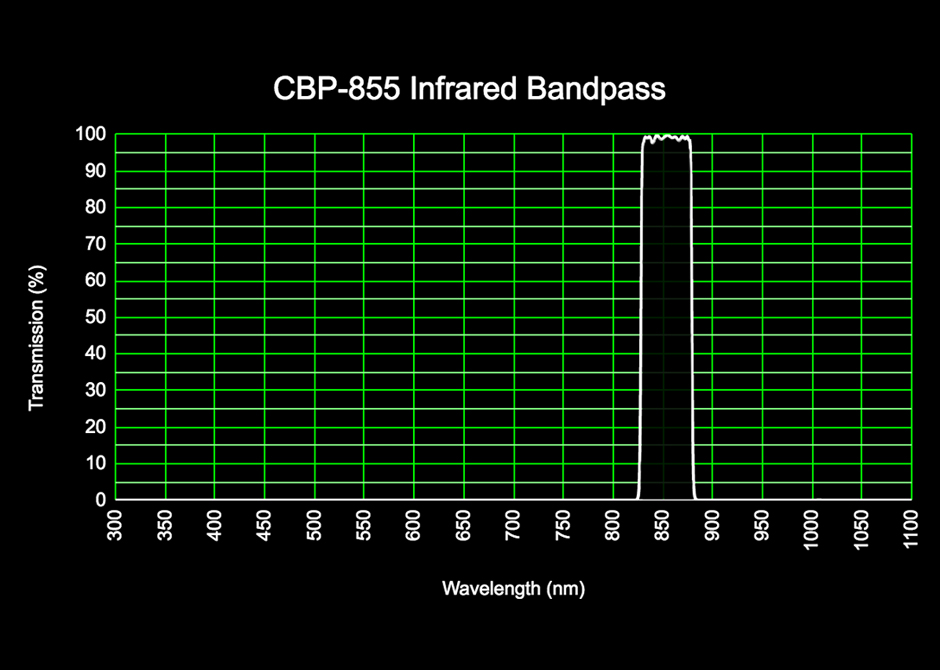

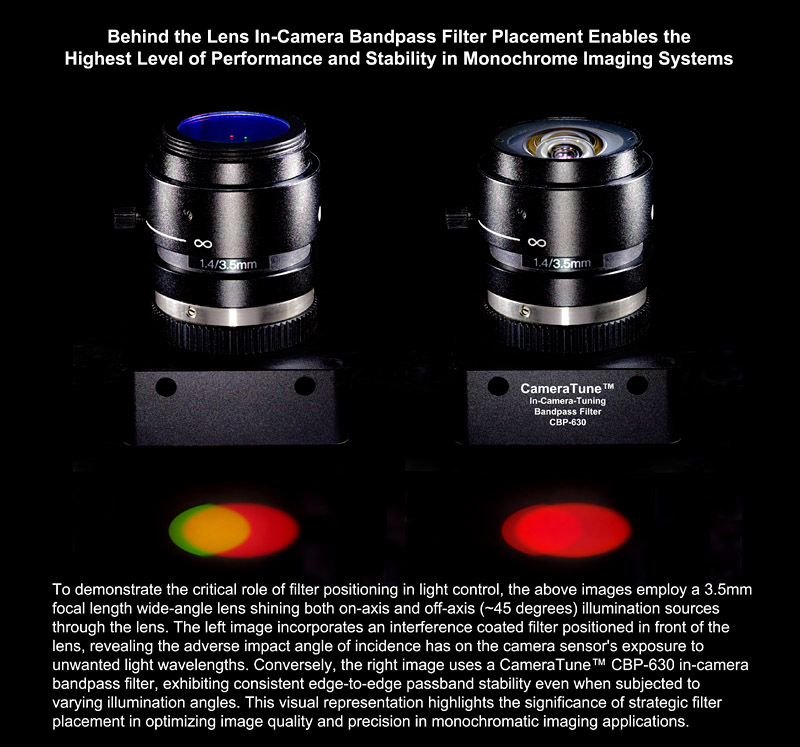
Behind the Lens Interference-Type Bandpass Filter Placement Enables the Highest Level of Performance and Stability in Monochrome Imaging Systems
 Bandpass filter designs either utilize interference coatings to reflect, colored filter glass to absorb or a hybrid of both to achieve their characteristic of blocking undesired light while transmitting only a select range of wavelengths. The bandpass design and placement within the imaging system play a critical role in their performance. As vision systems strive for higher precision, it is important to understand which type of design and where the ideal location within the optical path should be to provide the best results.
The placement of a filter within the imaging system is typically not much of a consideration as most camera lenses are equipped with threads to accept mounted filters in front of the lens. So intuitively they are most often placed in front of the lens. Despite being seldom discussed or recognized, this placement can and does significantly impact performance and restrict the effectiveness of the ideal type of bandpass filters, specifically interference-type filters. In general, lenses accept incident light at much wider angles in front of the lens which is then focused down to narrower angles that exit the back of the lens. This is particularly true with wide-angle lenses that are by far the most prominently used in vision systems.
The angle of incidence (AOI), the angle at which light strikes an interference-type filter, is crucial for its performance. These filters comprise multiple thin layers of dielectric materials designed to create constructive interference for specific wavelengths. When light enters at a non-zero degree angle, it alters the optical path length through the layers, causing a blue-shift in the filter’s center wavelength towards shorter wavelengths. At large angles of incidence, filter efficiency diminishes due to increased reflection or absorption. Nonetheless, interference-type filters can produce the ideal bandpass design as they allow for the highest transmissions, steepest edges, and deepest out-of-band blocking. However, these filters are rather susceptible to angle of incidence issues which will degrade performance when placed in front of the lens. It’s for this reason interference-type filters are considered to be unfavorable in vision systems, especially where consistent filter performance across large incident angles is vital such as with commonly used wide-angle lenses.
Hybrid-type filters, utilizing colored filter glass to block lower wavelengths of light and create cut-on edges, and interference coatings to block longer wavelengths and cut-off edges have attempted to provide some stability as color filter glass is absorptive and inherently angle-independent. Hybrid-type filters may offer some stability options for applications with looser performance requirements. However, they still share susceptibility to blue-shifting when placed in front of the lens, potentially compromising image quality and transmission. Although hybrid-type filters provided a better choice then colored filter glass alone as primarily used in the days of photographic film, they still are only doing half the job when edge stability is considered and along with a few other parameters are not the best choice to meet the demands of the ever increasing innovations in imaging applications.
The key advantages of interference-type filters become evident when compared to hybrid-type filters. Although the shorter wavelength half of the bandpass where colored filter glass is utilized is considered stable, the transitions of their cut-on slope from blocking to transmission are gradual, which reduces signal-to-noise ratios and contrast. Moreover, colored filter glass peak transmissions are limited, and out-of-band blocking is reliant on a specific nominal substrate thickness, typically between 2.0 – 3.0mm. Deviating from this thickness to offer thinner designs will compromise the level of unwanted light blocking.
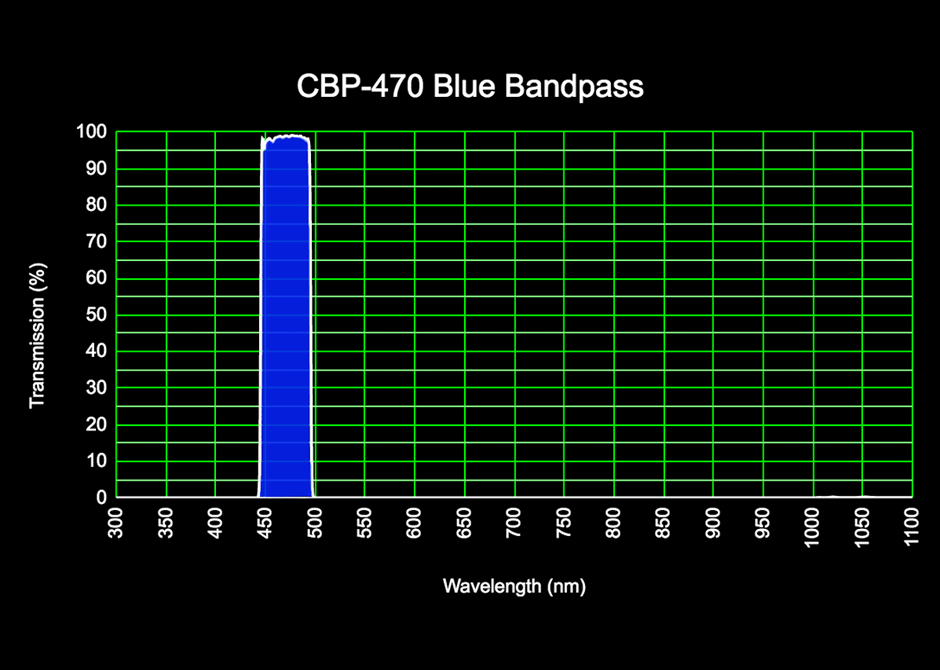
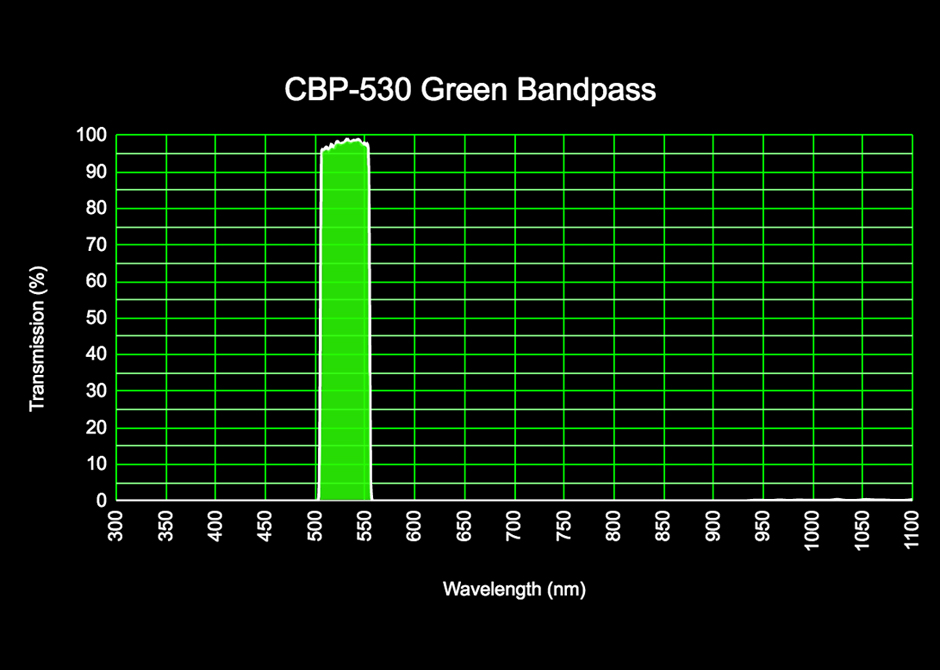
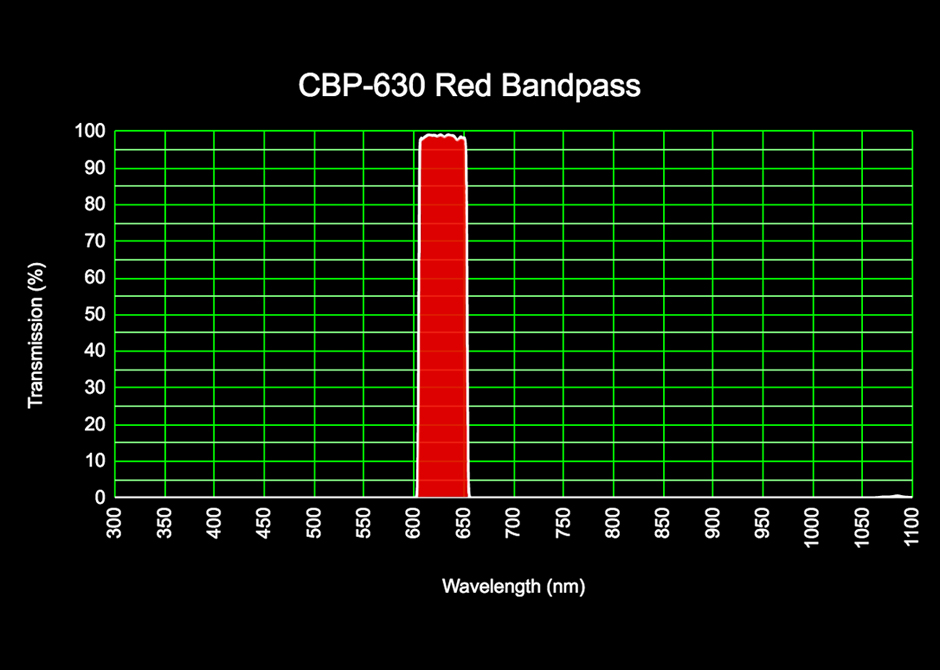
HeliOS CameraTune™ Bandpass Filters offer an innovative solution that effectively overcomes the challenges posed by blue-shifting and the limitations of hybrid-type filters to provide substantial benefits by properly tuning the camera for optimal image quality. Designed to be placed strategically behind the camera lens where the light is incident at the smallest angle to minimize angle interference, these interference-type filters deliver exceptional performance. They safeguard against blue-shifting, ensuring consistency and edge-to-edge stability while eliminating the gradual transitions that can compromise signal-to-noise ratios and contrast in hybrid-type filters. With remarkable illumination-harnessing capabilities, unwanted ambient light control, and the ability to maximize contrast and resolution, HeliOS CameraTune™ filters set a new standard for imaging consistency and excellence, meeting the demands of the most advanced imaging applications with unrivaled precision.